
"coffee cultivation to brew"
8000 article(s) found

What are the Brazilian coffee brewing steps for Brazilian half-sun bourbon brands?
For the exchange of professional baristas, please follow the coffee workshop (Wechat official account cafe_style) hand made in Brazil. 15g powder, medium grinding (small Fuji ghost tooth cutter 4 grinding), v60 filter cup, 88-89 degrees water temperature, 30g water injection for the first time, steaming for 27 seconds, water injection to 105g water cut off, wait for the water volume of powder bed to be reduced to half and then water injection, slow water injection until 225g water, do not use water at the end.

A brief introduction to the cultivation of Kenyan coffee beans with high standard quality control, climate and altitude
People in the coffee industry all think that Kenyan coffee is one of its favorite products because Kenyan coffee contains every feeling we want from a good cup of coffee. It has wonderful and satisfying aromas, well-balanced acidity, well-proportioned particles and excellent fruit flavors. The taste is so unique that there is almost no similar coffee. The characteristics of Kenyan coffee
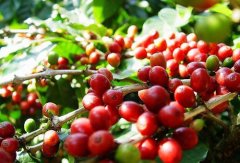
The temperature of brewing coffee affects the flavor of coffee the method of brewing coffee imported coffee beans
The harvesting method and refining method are adopted. Generally speaking, it is better to adopt manual harvesting method and water washing refining method. A variety of fine coffee. It is better to use Arabica inherent variety Tibica or bourbon variety. Is the altitude, topography, climate, soil and refinement of the cultivated land or farm clear? Generally speaking, the coffee with high altitude is of higher quality, and the fertile volcanic soil is the best soil.

How to brew Yunnan small-grain coffee the characteristic brand ranks 2016 in price.
How to brew Yunnan small-grain coffee ranks 2016 in price. Mainlanders call Yunnan coffee "small-grain coffee". Local people think that Yunnan coffee varieties are excellent, but some people in the industry also point out that although most of today's Yunnan coffee is Arabica, it mostly belongs to Catimor in Arabica, which was gardened by Portugal in 1969.

Description of flavor of Costa Rican coffee bean black honey introduction to the taste of grinding scale varieties
How does Costa Rican coffee bean black honey brew flavor description grinding scale varieties taste introduction Costa Rican boutique coffee only began to come to the fore in the past decade. Although Costa Rica introduced coffee from Cuba as early as 1729 and carried out commercial cultivation, it made great efforts to develop the coffee bean industry. But it is mainly the production and distribution of comprehensive coffee beans and Italian commercial beans.

Hawaiian coffee beans | Kona boutique coffee bean producing area, what is the most beautiful coffee bean in the world?
Hawaiian Kona coffee beans are well known internationally as the Blue Mountain Coffee of Jamaica. The sun and beaches of the Hawaiian island are fascinating, and the Kona coffee grown here is also a boutique here. The Kona area is sunny for most of the day, and the volcanic soil brought by the Hawaiian volcano makes the soil here

Refreshing taste description of Kenyan Coffee Flavor characteristics of Grinding degree introduction of taste varieties
If you only know how to brew, but not how to taste coffee, the original delicacy may become tasteless. Some people taste coffee with the taste of the tongue, while others enjoy the aromatic mellow in the mouth. in addition, it depends on the condition of the body and the atmosphere around the coffee. In a word, tasting coffee is a very delicate thing. To
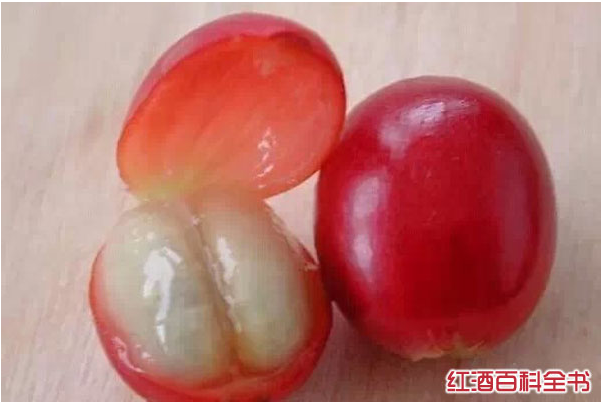
How is a good cup of coffee born?
Do you still remember the self-cultivation of an actor by Zhou Xingchi, the king of comedy? This incident tells us that if salted fish want to turn around, self-cultivation is very important and key. Back to the point, how did a good cup of coffee come into being? We have to go back to the source and watch the self-cultivation of small coffee beans together with the editor. How does a small coffee seed go through several years of spring and autumn

Coffee bean varieties coffee bean varieties classified coffee varieties
Professional coffee knowledge exchange more coffee bean information please follow the coffee workshop (Wechat official account cafe_style) in the global coffee, Arabica species account for about 70% of the total output, has important commercial value. Arabica species spread to all parts of the world from the Arabian Peninsula, and subspecies such as Tibica species and slope species appeared according to the route of transmission, followed by mutation and crossing.

Description of Kenyan Coffee Flavor with Fruit Flavor introduction to the characteristics of Grinding degree treatment in producing areas
If you only know how to brew, but not how to taste coffee, the original delicacy may become tasteless. Some people taste coffee with the taste of the tongue, while others enjoy the aromatic mellow in the mouth. in addition, it depends on the condition of the body and the atmosphere around the coffee. In a word, tasting coffee is a very delicate thing. To

Kenyan coffee taste Kenyan coffee characteristics of Kenyan coffee introduction of Kenyan coffee
Kenya is bordered to the north by Ethiopia, the origin of Arabica coffee trees, but it was not until the beginning of the 20th century that coffee cultivation began. In the 19th century, missionaries introduced Arabica trees from the leaves, but did not plant them in large quantities. It was not until 1893 that coffee was cultivated on a large scale because of the introduction of Brazil's ancient bourbon seeds. That is to say, Kenyan coffee is of Brazilian origin, because of water.

What's the taste of Yunnan Huaguo Mountain? how to brew Yunnan coffee?
For the exchange of professional baristas, please pay attention to the coffee workshop (Wechat official account cafe_style) factory name: coffee Qianjie Cafe location: No. 10 Baoqian Street, Yuexiu District, Guangzhou City, contact information: 020-38364473 ingredient table: 100% iron pickup order grinding shelf life: 20 net content: 10g packaging: bulk brand: coffee workshop series: Huaguoshan is organic food:

The roasting degree of coffee depends on how to pour water by hand, how to cultivate coffee beans and how to steam coffee.
The first water injection is the process of awakening the flavor of coffee, allowing hot water to flow out of the hand pot, making a circle clockwise to wet the noodles, and the coffee powder surface will expand in a moment. Standing for about 20 seconds, a few drops of coffee will flow out of the hand cup, and the pre-soaking time is related to the success or failure of hand coffee, which is like building a house with a good foundation, a solid foundation and half the success of the building.
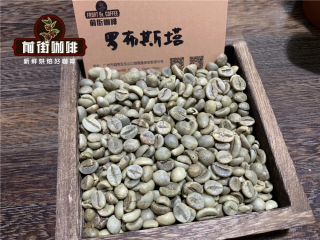
Which country is the Robusta coffee bean from? The difference between Robusta coffee beans and Arabica introduces the origin story in detail.
Robusta, which originated in the Congo basin on the west coast of Africa, should be called "Canefra coffee species" (Congolese species) if it is to be strictly classified according to botany, in order to correspond to the same level of "Arabica coffee species". The reason why it is so ignored by people is that other Canefa species have no enterprisers.

A brief introduction to the cultivation of coffee with fruit flavor in Kenya, climate and altitude
Kenyan coffee is mostly grown at 15002100 meters above sea level and is harvested twice a year. To ensure that only ripe berries are picked, people must tour the forest about seven times. Kenyan coffee is grown by small farmers. After they harvest the coffee, they first send the fresh coffee beans to the cooperative cleaning station, where the washed and dried coffee is covered with parchment beans.
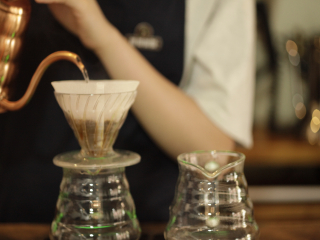
What kind of coffee beans are suitable for hand-brewing coffee? what are the types of hand-brewed coffee beans?
For more information about coffee beans, please visit the coffee workshop (Wechat official account cafe_style) a. Hand-made coffee: usually a single product of coffee beans as the raw material, roasting degree from light roasting, medium roasting to deep roasting are used. It is usually the degree of baking between the number of the figure below, about 9: 13.

Kenya Coffee Bean Arabica Coffee Flavor description method Variety characteristics Manor introduction
Kenya is bordered to the north by Ethiopia, the origin of Arabica coffee trees, but it was not until the beginning of the 20th century that coffee cultivation began. In the 19th century, missionaries introduced Arabica trees from the leaves, but did not plant them in large quantities. It was not until 1893 that coffee was cultivated on a large scale because of the introduction of Brazil's ancient bourbon seeds. That is to say, Kenyan coffee is of Brazilian origin, because of water.
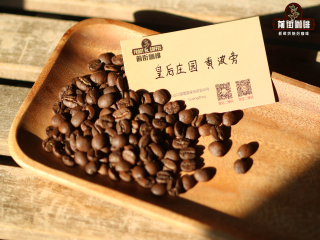
Introduction to the brewing taste of Brazilian coffee beans: the story of the origin of cultural cultivation and historical varieties in Brazilian coffee producing areas
Following Cafe (official Wechat account vdailycom) found that Beautiful Cafe opened a small shop of its own. Portugal colonized Brazil for more than 300 years from the beginning of the 6th century to the 1820s. The colonial rule of Portugal had a profound impact on Brazil's economy, politics, society and culture.
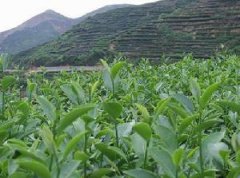
Some knowledge about Kenyan coffee-2
Kenya Coffee-introduces Ethiopia, the origin of Arabica coffee trees near Kenya to the north, but it was not until the beginning of the 20th century that coffee cultivation began. Missionaries introduced Arabica trees from Yemen in the 19th century, but did not plant them in large quantities. It was not until 1893, when Brazil's ancient bourbon coffee seeds were introduced, that coffee was cultivated on a large scale.

What is the price of Cuban coffee? how does Cuban Crystal Mountain coffee taste?
Professional Coffee knowledge Exchange more information about coffee beans Please follow the coffee workshop (Wechat official account cafe_style) in 1748, coffee was introduced to Cuba from Domiga, and Cuba has been growing coffee ever since. With fertile land, humid climate and abundant Rain Water, Cuba can be called a natural treasure land for coffee cultivation. The suitable natural conditions provide a favorable natural environment for the growth of coffee trees.